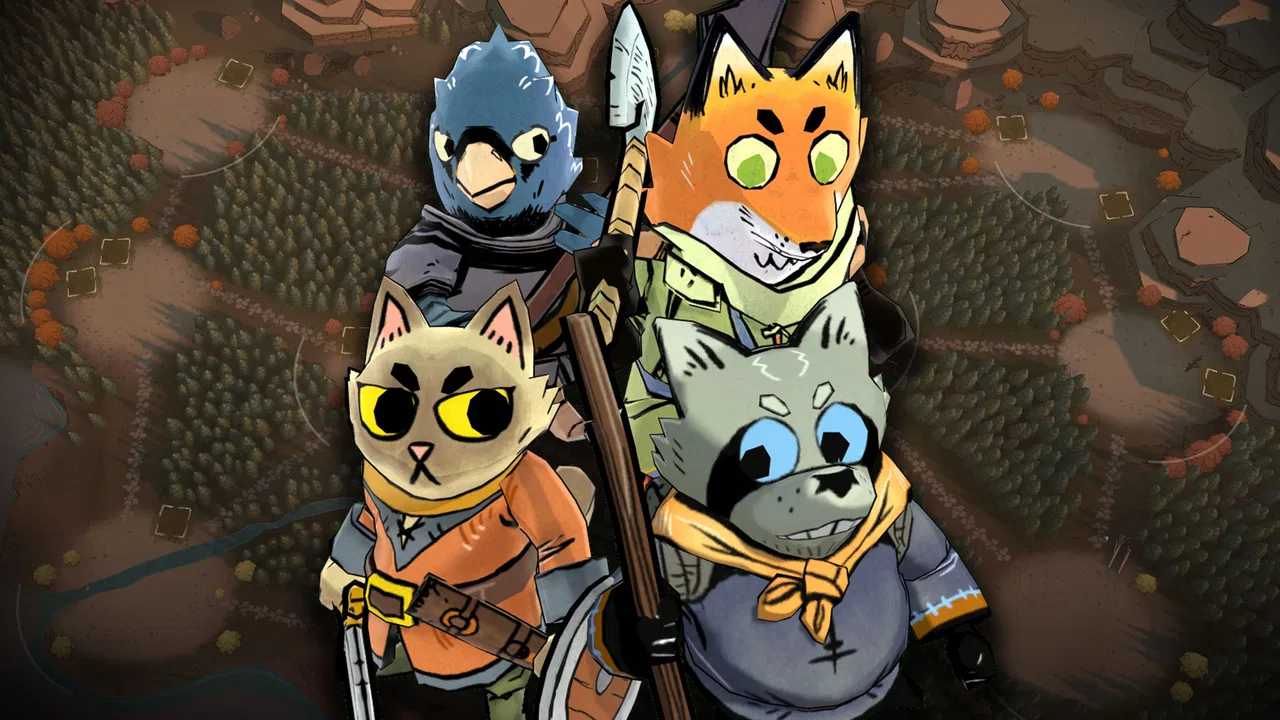
Root Board Game
- 4.9
- Rating
- 100.00K
- Installs
- $9.99
- Price

 Analysis by App-foxy
I went into Root Board Game expecting a digital version of a clever woodland strategy title, but what stayed with me was how quickly each decision creates a response from the table. I choose an action, another faction changes the situation, I gain or lose ground, and then I start planning around a board that no longer looks familiar. That rhythm is the real attraction. It is not simply a board game placed on a screen; it is a competitive system that keeps asking whether my current plan can survive everyone else’s priorities.
This is a paid board game from Dire Wolf Digital, priced at $9.99, with optional in-app purchases ranging from $5.99 to $9.99 per item. It is rated for Everyone, runs on Android 7.0 or later, and the current version is 2.1.5. The game reached mobile on September 24, 2020, and its 4.9 average from around 11 thousand ratings suggests that its audience is unusually enthusiastic. I can understand why, although the same depth that makes it rewarding also makes it a poor fit for someone wanting a quick, instantly understandable casual game.
Starting with one action and discovering the real game
The first useful lesson is that Root is not about finding one universally strong move. Its woodland factions do not approach the board in the same way, so an action that feels sensible for one side can be wasteful or even harmful for another. I have to think about movement, territory, buildings, cards, combat, and the timing of my turn as parts of a faction-specific plan rather than as a shared menu of equally valuable options.
You May Also Like

 Blood Strike: 2.5 Anniversary
Blood Strike’s Loadouts Turn Every Drop Into a Tactical Gamble
A close look at Blood Strike’s custom loadouts: how fast access to signature weapons reshapes its battle royale rhythm, rewards preparation, and narrows the gap between fights.

 Pandora - Music & Podcasts
Pandora’s Music Is Easy to Start, but Harder to Recover
Pandora’s strength is its low-effort path from a seed to a station. Its weak spot is how much confidence it asks you to place in connection, setup, and quiet recovery.

 8 Ball Pool
 Is Built on Rivalries, Rematches, and Routine
A close look at the rivalries, rematches, shared routines, and unanswered safety questions that turn a quick pool match into a persistent mobile community.

 Samsung Music
’s Quiet Strength Is Playing What You Already Own
Its reach comes less from spectacle than from dependable access to a personal library. That simplicity is both the app’s strongest retention engine and its ceiling.

 AccuWeather: Weather Radar
AccuWeather Review: A Quick, Clear Forecast for Everyday Decisions
For everyday plans, the best forecast is the one you can understand quickly. AccuWeather makes rain timing, radar, and local conditions easy to act on, with a few trade-offs.

 Hill Climb Racing
Why Hill Climb Racing Still Turns Crashes Into One More Run
A tiny car, a bumpy hill and one more upgrade: Hill Climb Racing keeps resurfacing because its simple chaos makes every near-miss feel personal.
More From Our News Desk
View All News


That asymmetry gives the opening move more weight than it has in many mobile board games. In a typical digital adaptation, I can often learn the rules by repeating the same basic actions until the system becomes predictable. Here, repetition teaches me something more subtle: each faction has its own engine, priorities, and danger points. The first action is therefore also a commitment to a particular style of play.
The interface helps me inspect the board and understand what I can do, but it does not remove the need to learn. New players should expect a period of looking at icons, card effects, faction rules, and possible consequences before a turn feels natural. I would not recommend treating the first session as a serious test of skill. It is better viewed as a guided experiment in which mistakes reveal how the woodland factions interact.
One practical tip made a noticeable difference for me: I stopped trying to optimize every action immediately and instead chose a small objective for the turn. That might mean establishing a safer position, preparing a later scoring opportunity, or denying another faction the space it needs. This approach reduces the mental load and makes the game’s feedback easier to read.
The digital format is especially useful during that learning stage because the board state remains visible and the game handles the administrative work. I can focus on why an action matters instead of manually checking every consequence. That does not make Root simple, but it makes its complexity more manageable than handling the physical game without an experienced group.
Why the first decision feels different from ordinary mobile strategy
In many strategy games on a phone, the opening is about building a familiar foundation: gather resources, improve production, and wait for stronger options. Root is more confrontational from the beginning. Positioning is political as well as tactical, because my expansion can create a target, block a rival, or alter the value of a region for everyone at the table.
I also found that the best first action is often the one that preserves future choices. Spending everything to make a dramatic move may look satisfying, but it can leave me unable to respond when an opponent changes the board. That creates a useful tension between immediate progress and flexibility. The game rewards players who can plan ahead without becoming trapped by their own plan.
This is one of the first signs that Root suits people who enjoy reading a shared situation. If I prefer a puzzle that I can solve independently, the interaction may feel disruptive. If I like watching several plans collide and adjusting my own approach, the first turn quickly becomes engaging.
The feedback rhythm: action, reaction, and changing information
Root’s strongest quality is the speed at which the board answers my decisions. I take an action, and the consequences are rarely isolated. A move can open a route, expose a weakness, change who controls a clearing, or make another player’s scoring plan more urgent. The feedback is not always a simple reward, but it is almost always informative.
That creates a satisfying rhythm. I make a choice, inspect the new board, reconsider my assumptions, and prepare for the next turn. The game does not let me remain comfortable for long because the other factions are pursuing different goals. Even when I am ahead, I have to ask whether that lead is actually secure or merely visible.
For an everyday example, imagine having a short evening free after work. I might begin a session thinking I will focus on a quiet expansion plan. A rival faction then occupies a clearing that was central to my route. I can fight for it, change direction, or use the disruption to pursue a different scoring opportunity. The important part is that the session does not collapse into a single mistake. The board gives me a new problem, and that problem becomes the reason to keep playing.
The feedback can also be uncomfortable. Root does not always tell me that I am losing in a neat, obvious way. I may be collecting points while allowing another faction to build a position that will become difficult to stop. Conversely, I may look behind while quietly preparing a turn that changes the balance. This uncertainty is valuable, but it means the game demands more attention than a relaxing solitaire board game.
I recommend paying attention to what each opponent needs rather than watching only the visible score. A faction that appears passive may be accumulating exactly the position or resources required for a sudden swing. Learning to identify those warning signs is one of the most transferable skills in the game, and it is more useful than memorizing a favorite opening.
The cost of asymmetry
Asymmetry is the source of Root’s personality, but it also creates friction. When I change factions, I am not merely changing a few abilities. I am learning a different way to evaluate the board. A player who understands one faction well may still need several sessions before another faction’s priorities feel intuitive.
That makes the game less suitable for a mixed group where one person wants to play immediately and another wants to study rules. The digital version can manage procedures, but it cannot instantly provide strategic understanding. I would set aside time for learning rather than introducing it as a five-minute filler between other games.
There is also a social trade-off. Root is at its best when players discuss the changing balance, make deals through their actions, and react to one another. Playing digitally can make that interaction quieter, particularly if everyone is concentrating on their own screen. The adaptation preserves the strategic contest, but a physical table may feel warmer for groups that value conversation as much as the mechanics.
Rewards that encourage another attempt
The reward in Root is not limited to winning. Of course, reaching the objective feels good, but I also get smaller rewards from understanding why a plan worked or failed. The first time I recognize that an opponent is preparing a dangerous position, or when I turn an apparent setback into a useful opening, I feel that I have learned something concrete.
This is why the game’s replay value comes from decision-making rather than from a simple collection of unlocks. I want to try the same faction again with a better opening, then test whether that opening survives against a different opposing combination. A session teaches me how the system behaves, but rarely gives me a complete answer.
The reward loop is strongest when I set a specific learning goal. Instead of saying that I must win, I might focus on protecting a key region, timing a major scoring push, or avoiding an early commitment that leaves me exposed. These goals make a difficult match feel productive even when the final result is disappointing.
That said, players who need frequent, obvious rewards may find Root slow to appreciate. It does not replace strategic understanding with constant celebrations. The satisfaction often arrives after I review a sequence of decisions and realize that the turning point happened earlier than I thought.
The optional purchases deserve consideration before downloading. The initial price already positions this as a premium mobile board game, while the additional items ranging from $5.99 to $9.99 can raise the total cost for players who want more content. I would approach it as a complete strategy experience first and consider extras only after deciding that the core game fits my taste.
Who gets the most from the reward loop
I think the best audience is someone who enjoys learning through repeated competition. You do not need to be an expert board gamer, but you should be comfortable losing while you discover why a move mattered. The game rewards patience, observation, and a willingness to change plans.
It is also a strong choice for players who like faction variety. Because the factions do not simply feel like cosmetic alternatives, changing sides changes the questions I ask during a turn. That gives the game a longer life than a board game built around one shared strategy.
I would skip it if I wanted a quick game with minimal reading, a purely cooperative experience, or a calm solo activity where opponents do not interfere with my plan. I would also choose a simpler board game app for a family member who is new to strategy games and wants immediate results. Root’s Everyone rating describes its audience suitability, not its learning curve.
Resetting the session without feeling that progress was wasted
Eventually every match reaches a reset point. The board has changed enough that my original plan no longer makes sense, or another faction has created a threat that demands a new response. This is where Root differs from games that encourage me to follow a fixed build order until the end. I have to mentally reset while the match continues.
That reset is often the moment I become most engaged. I stop asking how to complete the plan I started with and begin asking what the current board allows. A lost clearing may redirect my expansion. A failed attack may reveal that I misread the opponent’s strength. A delayed scoring opportunity may become more valuable because the table has shifted elsewhere.
There is a useful habit here: after a major setback, I take a moment to identify what remains under my control. Perhaps my cards, position, faction ability, or scoring route still gives me a path forward. This prevents the common mistake of spending the next turn trying to repair everything at once.
The reset can also expose one of the game’s harder limitations: a match that becomes strategically lopsided may feel demanding to finish. Root is built around interaction, so a player who falls behind may need to negotiate, adapt, and exploit mistakes rather than simply wait for a comeback mechanic. I appreciate that honesty, but it can be frustrating when I want a shorter, cleaner conclusion.
For that reason, I would not start a session unless I had enough uninterrupted time to think. The game can be paused or revisited more conveniently than a physical board left on a table, but the decisions still require continuity. Returning after a long break may mean rebuilding my understanding of who wants what and why the board reached its current state.
How it compares with familiar alternatives
Compared with lighter digital board games, Root gives me far more interaction and faction identity, but asks for more study in return. A simple card battler may deliver faster turns and clearer rewards. A classic abstract strategy game may offer cleaner rules and fewer exceptions. Root is the better choice when I want a living contest in which several different plans compete for the same woodland space.
Compared with playing the physical board game, the app’s main advantage is administration. It can make legal actions, board changes, and turn procedures easier to follow, which is particularly useful when learning. The physical version remains more appealing for players who want face-to-face negotiation, visible components, and a shared social occasion.
Compared with a conventional mobile strategy game, Root feels less like a long progression campaign and more like a series of concentrated political puzzles. I am not simply upgrading one empire along a familiar path. I am trying to understand a temporary balance of power, exploit an opening, and survive the consequences of my own choices.
That comparison also explains why it is not the right alternative for everyone. If my priority is a short commute game with low cognitive demand, I would choose something more immediate. If my priority is replayable competitive depth in a board-game format, Root offers a much richer loop than most casual options.
The loop verdict after repeated sessions
My final assessment is that Root succeeds because its core loop remains tangible from beginning to end: I take an action, the board responds, I gain information or position, the situation shifts, and I reset my plan before the next turn. The reward is not merely a number on a screen. It is the feeling that I understand the woodland conflict a little better than I did before.
Dire Wolf Digital has made a demanding board game practical to play on mobile, and the strong 4.9 average from over 11 thousand ratings reflects how well that formula connects with its intended audience. With more than 100 thousand installs, it has also found a substantial mobile audience for a game that expects real attention rather than passive tapping.
I would recommend it to a friend who likes competitive board games, asymmetric factions, and the satisfaction of improving through mistakes. I would explain the price clearly, including the optional purchases, and suggest treating the first few sessions as learning matches. The game becomes much more enjoyable once I stop measuring every turn only by immediate points and start reading the whole table.
Root Board Game is worth choosing when you want every decision to reshape the next one. It is less convincing as a casual time-filler, a frictionless family introduction, or a low-pressure solo diversion. But for players willing to learn its factions and accept occasional setbacks, the reason to begin another session is always close at hand: the previous match showed me what I misunderstood, and the next one gives me a chance to test whether I can finally respond better.
FAQs for Root Board Game
01What is Root Board Game, and how does the digital version work?
Root Board Game is a digital adaptation of the asymmetric woodland strategy game in which each faction follows different rules, objectives, and play styles. Instead of simply collecting points in the same way, players control groups such as the Marquise de Cat, Eyrie Dynasties, Woodland Alliance, or Vagabond. The app recreates the board game with guided rules, automated calculations, animated actions, and online or local play options, depending on the version and platform.
02Is Root Board Game suitable for beginners?
Root Board Game can be enjoyed by beginners, but it has a steeper learning curve than many casual strategy games. Each faction has its own mechanics, and understanding how their goals interact takes time. The digital version is helpful because it handles setup, combat calculations, crafting effects, and rule enforcement. New players should begin with the tutorial or introductory scenarios before joining competitive multiplayer matches.
03Can I play Root Board Game offline or without other players?
The digital version generally offers ways to play against computer-controlled opponents, making it possible to practice without waiting for a full group of players. Offline availability and specific modes may vary by device, edition, and installed version, so it is worth checking the store description before downloading. Solo play is useful for learning faction abilities, although the game is especially engaging when several human players create shifting alliances.
04Does Root Board Game include multiplayer and cross-platform play?
Root Board Game is designed to support multiplayer experiences, including online matches and, in some versions, local or pass-and-play sessions. However, cross-platform compatibility, account requirements, and available multiplayer features can differ between Android, iOS, PC, and console editions. Before purchasing or downloading, check whether your device can play with friends on their platforms and whether online play requires an account or additional service.
05Are expansions or additional factions included in Root Board Game?
The base version of Root Board Game normally focuses on the core factions and content from the original game, while extra factions, maps, cards, and mechanical features may be offered as separate downloadable expansions. Availability can depend on the platform and edition. If you are interested in a particular faction or expansion from the tabletop game, review the in-app content list before downloading, since not every add-on is necessarily included.
Pros
- Faithfully adapts the woodland strategy board game
- Asynchronous multiplayer supports flexible play sessions
- Distinct factions offer varied strategies and replay value
- Clear digital rules help newcomers learn the game
- Pass-and-play options make local matches convenient
Cons
- Steep learning curve for players unfamiliar with Root
- Matches can take a long time to complete
- Some factions may feel unbalanced for inexperienced players
- Online matchmaking activity may vary by region and time
- Small interface elements can be difficult to read on phones

Root Board Game
Gallery